
Before We Pressed Start
Enjoying the show? Support it here.
Before games taught us how to play, there were instruction manuals.
Folded inside the box, they were more than just guides to the controls. They introduced us to new worlds, told stories, shared artwork, and built excitement long before we ever pressed the Start button.
In Episode 7 of Artifacts, Danny Brown explores why video game manuals became such an important part of growing up for a generation of players. From reading them in the car on the way home to studying every screenshot before finally getting to play, these little booklets sparked imagination in ways that today's instant downloads rarely can.
But this isn't really a story about instruction manuals.
It's about anticipation, imagination, and a time when discovering a new world began on paper before it ever appeared on a screen.
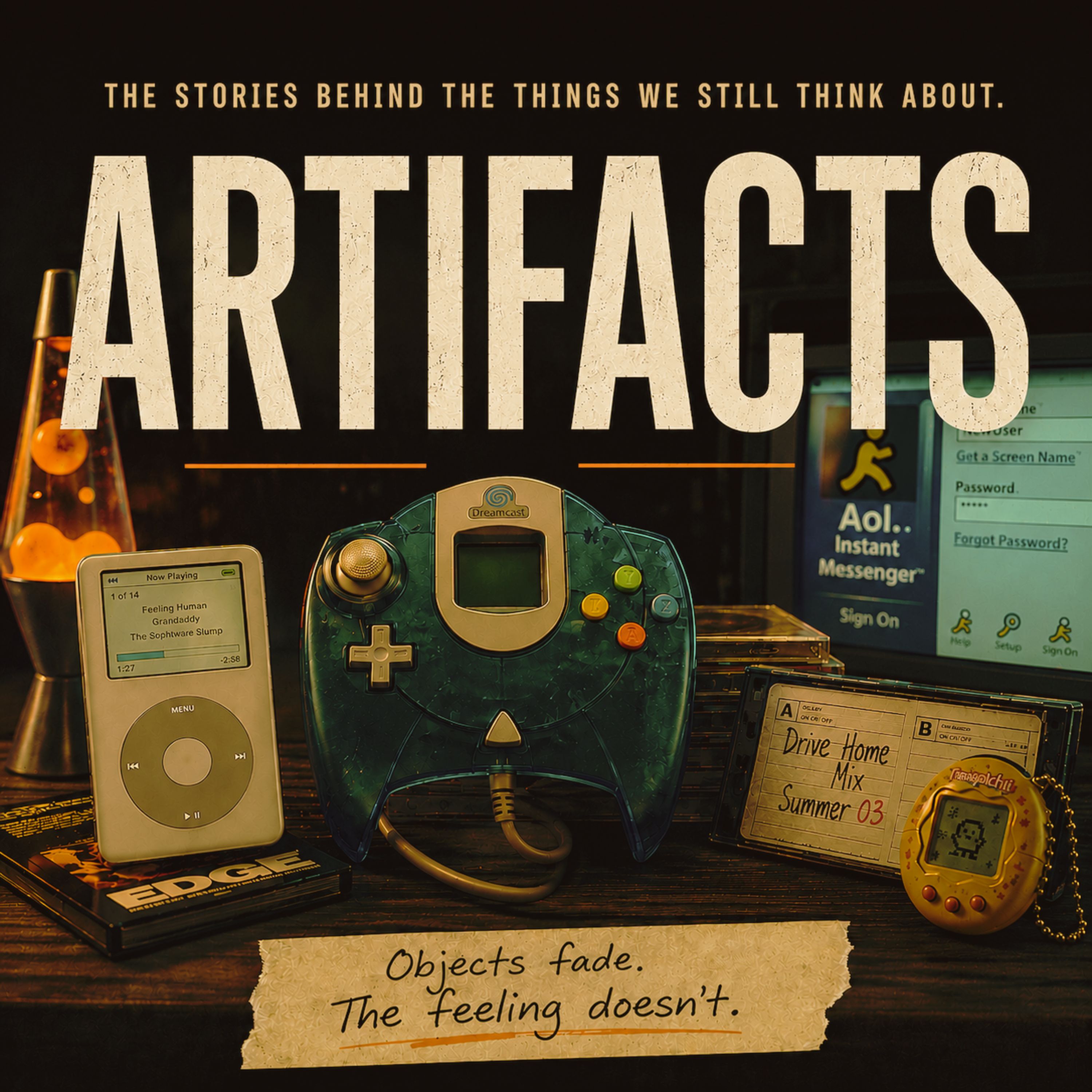
Because sometimes the objects fade.
But the feeling doesn’t.
Get involved
If you enjoy Artifacts, you can support it with either a one-off tip, or become a monthly Archivist.
No commitment - just a simple way to say thanks. Show your support here.
If you enjoy the show, I'd love for you to leave a rating or review on your favourite podcast app!
And please let your friends and other podcasters know they can listen for free on Apple Podcasts, Spotify, YouTube, their preferred podcast app, or online at Artifacts Podcast.
Products I Use for Artifacts
Note: these may contain affiliate links, so I get a small percentage of any product you buy when using my link.
My equipment:
- RODE NT1-A large diaphragm condenser mic
- Rodecaster Pro II audio production studio
- Sony MDR-7506 Studio Monitor Headphones
- Elgato Wave Mic Arm Low Profile
Recommended resources:
Transcript
Before games needed updates, before walkthroughs lived online,
Speaker:before YouTube could show you exactly what to do, there was the manual.
Speaker:A small booklet tucked inside the game case, sometimes black and white,
Speaker:sometimes beautifully illustrated, sometimes barely more than a few folded pages.
Speaker:And yet for many of us, it was the first part of the adventure,
Speaker:long before we pressed start.
Speaker:Because game manuals didn't just explain how to play they invited us into another world.
Speaker:Sometimes you had the game before you could actually play it.
Speaker:Maybe your parents bought it early for Christmas. Maybe you rented it on the way home.
Speaker:Maybe you were reading the manual in the back seat of the car counting every
Speaker:traffic light between the store and your house.
Speaker:You couldn't wait. So you read. Every page, every character description,
Speaker:every item, every tiny screenshot but every control diagram.
Speaker:Because you weren't just learning the game, you were imagining it.
Speaker:And imagination is really good at making things feel even bigger than reality.
Speaker:So by the time that tiny little screen finally appeared, you already felt like
Speaker:you belonged in that world.
Speaker:Some manuals were surprisingly ambitious. They didn't just tell you which button
Speaker:jumped, they told stories.
Speaker:They introduced kingdoms, heroes, villains, maps, and history.
Speaker:Sometimes they even included handwritten notes, fake documents,
Speaker:or little pieces of world building that never appeared in the game itself.
Speaker:Developers then understood something important. The experience didn't begin
Speaker:when the console or the computer was switched on.
Speaker:It began the moment you opened a box.
Speaker:Even the smell of fresh ink, the glossy pages, the artwork, it all became part of the memory.
Speaker:Today, most games launch with no manual at all. Need help? The game teaches
Speaker:you, or the internet does.
Speaker:It's practical and efficient, but with that efficiency, something disappeared.
Speaker:The joy of discovering a world before stepping into it.
Speaker:One thing I miss most about manuals is that they left room for imagination.
Speaker:Those tiny screenshots weren't enough to spoil anything. Instead,
Speaker:they teased, and they hinted, and the artwork often looked nothing like the graphics.
Speaker:But yet, somehow, that made the game feel even larger. Your mind filled in the gaps.
Speaker:The manual became a bridge between reality and possibility.
Speaker:Today, we usually know everything before a game launches. We've watched trailers,
Speaker:gameplay videos, Developer interviews, reviews, and sometimes we've even seen
Speaker:the ending before starting the game.
Speaker:The mysteries become optional, but back then, mystery was unavoidable,
Speaker:and maybe that's why those worlds felt so magical.
Speaker:Looking back, it's remarkable how much value lived inside a game box.
Speaker:The cartridge or disc, the manual, the artwork, the registration card you'd
Speaker:never send, Maybe a fold-out map. Maybe a poster if you were lucky.
Speaker:Opening a new game felt like opening a small treasure chest.
Speaker:Everything inside mattered.
Speaker:The packaging wasn't separate from the experience, it was the beginning of it.
Speaker:Today we download games in minutes. There's no box, no booklet.
Speaker:No pages to flip through while the installation bar slowly crawls across the screen.
Speaker:We've gained convenience, but we've lost ceremony. And ceremonies matter.
Speaker:They tell our brains, this moment is important. Remember it.
Speaker:And that's why I feel we miss instruction manuals today. Not because they explained
Speaker:the controls, but because they asked us to slow down.
Speaker:To wonder. To imagine.
Speaker:To spend a little time with a word before we entered it.
Speaker:Because the first adventure wasn't on the screen. It was in our hands.
Speaker:I'm Danny Brown, and this is Artifacts.